
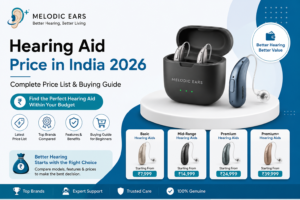
Hearing loss is a growing concern globally, and India is no exception. With advancements in medical technology, hearing aids have become incredibly sophisticated, offering life-changing benefits to millions. However, navigating the landscape of hearing aid prices can be complex, especially with the myriad of brands, types, and technological features available. As we look towards 2026, understanding the projected costs and what influences them is crucial for making an informed decision.
This comprehensive guide aims to demystify the hearing aid price in India for the year 2026, providing a detailed breakdown by technology, brand, and type. We will explore the factors that drive costs, help you understand which device might be best suited for your specific needs, and answer frequently asked questions, empowering you to invest wisely in your auditory health and overall quality of life.
Hearing Aid Price in India (Quick Price Table)
The cost of a hearing aid in India can vary dramatically, ranging from basic models designed for simple amplification to highly advanced, feature-rich devices that integrate cutting-edge artificial intelligence and seamless connectivity. This variation primarily stems from the technology level embedded within the device. Below is a quick overview of the projected price ranges for hearing aids in India for 2026, categorized by their technological sophistication. Please note that these figures represent the price per ear and are estimates, subject to change based on market dynamics, technological innovation, and retailer policies.
Also Read- Hearing Aids, Hearing Tests & Hearing Solutions in India
| Technology Level | Description | Typical Price Range (per ear, INR) |
|---|---|---|
| Basic | Entry-level devices offering essential amplification and noise reduction for quiet environments. Manual controls are common. | ₹5,000 – ₹35,000 |
| Essential/Standard | Improved sound processing, some automatic features, better performance in moderately noisy settings. Often offers fundamental digital features. | ₹35,000 – ₹90,000 |
| Advanced | Sophisticated sound processing, adaptive features, good performance in varied challenging sound environments, often with Bluetooth connectivity. | ₹90,000 – ₹2,00,000 |
| Premium/Flagship | Top-tier technology, incorporating AI, seamless connectivity, best speech clarity in complex environments, advanced personalization, and health tracking features. | ₹2,00,000 – ₹4,50,000+ |
It’s important to remember that the hearing aid machine price often includes professional services such as hearing assessments, initial fitting, programming, and follow-up adjustments. The complexity and duration of these services can also contribute to the overall cost.
Also Read- How AI Is Redefining Hearing Care in India
Hearing Aid Price by Brand
Globally, several leading manufacturers dominate the hearing aid market, each bringing its unique strengths, patented technologies, and design philosophies. In India, these international brands are widely available, offering a spectrum of devices to cater to diverse needs and budgets. The brand you choose significantly influences the hearing aid prices, not just due to reputation but also due to the research and development invested in their proprietary technologies.
Here’s a detailed look at some of the most prominent hearing aid brands in India and their estimated price ranges for 2026:
Signia (formerly Siemens)
Signia, part of the WS Audiology group, is a German brand renowned for its precision engineering, innovative sound processing, and stylish designs. They are particularly known for their “Own Voice Processing (OVP)” technology, which allows users to hear their own voice more naturally, and their Styletto line, which combines high-tech hearing with a fashionable form factor. Signia offers solutions across all technology levels and hearing aid types.
- Key Features: Own Voice Processing, PureSound, Dynamic Soundscape Processing, rechargeable options, Bluetooth connectivity, telecare solutions.
- Specialization: Natural sound experience, discreet designs, advanced connectivity.
| Signia Series / Model Example | Technology Level | Estimated Price Range (per ear, INR) |
|---|---|---|
| Pure C&G/AX (e.g., 1AX, 2AX) | Basic to Essential | ₹25,000 – ₹70,000 |
| Pure Charge&Go AX (e.g., 3AX, 5AX) | Essential to Advanced | ₹70,000 – ₹1,80,000 |
| Styletto AX (e.g., 7AX) | Advanced to Premium | ₹1,50,000 – ₹3,00,000 |
| Silk Charge&Go IX / Insio Charge&Go IX | Advanced to Premium (Custom IIC/CIC) | ₹1,80,000 – ₹3,50,000 |
| Motion Charge&Go P/SP (BTE) | All Levels (Power BTE) | ₹30,000 – ₹2,50,000 |
Also Read-
Phonak
A Swiss-based company, Phonak, also part of the Sonova Group, is a global leader known for its powerful solutions, especially in pediatric audiology and for individuals with severe to profound hearing loss. Their popular Marvel and Paradise platforms have revolutionized connectivity, offering universal Bluetooth streaming to virtually any smartphone or audio device. Phonak emphasizes clarity, comfort, and seamless integration with daily life.
- Key Features: AutoSense OS, Roger technology compatibility, universal Bluetooth connectivity, rechargeable options, powerful BTEs.
- Specialization: Powerful solutions, universal connectivity, pediatric hearing aids.
| Phonak Series / Model Example | Technology Level | Estimated Price Range (per ear, INR) |
|---|---|---|
| Audeo Lumity L-R (RIC) (e.g., L30, L50) | Basic to Essential | ₹20,000 – ₹80,000 |
| Naida Paradise P-PR (Power BTE) | Essential to Advanced | ₹75,000 – ₹2,00,000 |
| Audeo Lumity L-R (e.g., L70, L90) | Advanced to Premium | ₹1,50,000 – ₹3,50,000 |
| Virto Paradise / Lumity (Custom ITE/CIC/IIC) | All Levels (Custom) | ₹50,000 – ₹4,00,000 |
| Sky Lumity (Pediatric BTE/RIC) | All Levels (Pediatric) | ₹40,000 – ₹3,00,000 |
Widex
Widex, a Danish brand also part of WS Audiology, prides itself on delivering a natural sound experience. Their unique PureSound technology (with ZeroDelay™ processing) aims to eliminate artificial sound effects, allowing users to hear sounds as they truly are. Widex devices are often praised for their aesthetic appeal and innovative sound processing techniques, particularly for music lovers.
- Key Features: PureSound, ZeroDelay, SoundSense Learn (AI), rechargeable, DEX accessories.
- Specialization: Natural sound quality, elegant designs, tinnitus management.
| Widex Series / Model Example | Technology Level | Estimated Price Range (per ear, INR) |
|---|---|---|
| Magnify (BTE/RIC) (e.g., 50, 100) | Basic to Essential | ₹30,000 – ₹85,000 |
| Moment (BTE/RIC) (e.g., 220, 330) | Essential to Advanced | ₹80,000 – ₹2,20,000 |
| Moment Sheer (RIC) / Moment CIC/IIC | Advanced to Premium | ₹2,00,000 – ₹3,80,000 |
| Cross and CROS RIC/BTE | Specialty (Unilateral Deafness) | ₹1,50,000 – ₹3,00,000 |
Also Read- What Are Hearing Aids? Complete Guide for Beginners
Oticon
Another prominent Danish brand, Oticon, is known for its “brain-friendly” hearing philosophy, designing devices that support the brain’s natural way of processing sound. Their flagship More™ and Zircon platforms offer an “open sound experience” that provides access to all relevant sounds in a 360-degree environment, rather than focusing solely on speech in front. This approach aims to reduce listening effort and improve speech understanding.
- Key Features: MoreSound Intelligence, MoreSound Optimizer, BrainHearing technology, open sound experience, rechargeable options, Tinnitus SoundSupport.
- Specialization: Brain-friendly technology, open sound experience, speech understanding in complex environments.
| Oticon Series / Model Example | Technology Level | Estimated Price Range (per ear, INR) |
|---|---|---|
| Zircon (BTE/miniRITE) (e.g., 1, 2) | Basic to Essential | ₹30,000 – ₹90,000 |
| Opn S (BTE/miniRITE) (e.g., 1, 2, 3) | Essential to Advanced | ₹85,000 – ₹2,50,000 |
| More™ (miniRITE R) (e.g., More 1, 2, 3) | Advanced to Premium | ₹1,80,000 – ₹4,20,000 |
| Xceed (Power BTE) (e.g., Xceed 1, 2, 3) | All Levels (Power BTE) | ₹50,000 – ₹3,00,000 |
Starkey
Starkey, an American company, stands out for its innovations in artificial intelligence (AI) and integrated health tracking features. Their Livio AI and Evolv AI lines are capable of tracking physical activity, monitoring brain health, and even detecting falls, offering a holistic approach to wellness beyond just hearing. They are also known for their advanced custom in-the-ear solutions.
- Key Features: AI integration, health tracking (steps, heart rate, brain engagement), fall detection, language translation, rechargeable options, custom ITE/IIC.
- Specialization: AI features, health and wellness tracking, advanced custom products.
| Starkey Series / Model Example | Technology Level | Estimated Price Range (per ear, INR) |
|---|---|---|
| Muse iQ (Custom/BTE/RIC) | Basic to Essential | ₹28,000 – ₹80,000 |
| Livio AI (Custom/BTE/RIC) (e.g., 1000, 1200) | Essential to Advanced | ₹75,000 – ₹2,00,000 |
| Evolv AI (Custom/BTE/RIC) (e.g., 2000, 2400) | Advanced to Premium | ₹1,80,000 – ₹3,70,000 |
| Picasso (Custom IIC/CIC) | All Levels (Custom) | ₹40,000 – ₹3,00,000 |
ReSound
ReSound, another Danish brand and part of the GN Group, is known for its “Smart Hearing” philosophy, focusing on combining advanced technology with user-friendly interfaces. They pioneered Made for iPhone (MFi) hearing aids and continue to offer excellent direct streaming capabilities. Their Omnia and ONE platforms deliver spatial sound awareness and exceptional speech understanding, especially in noisy environments.
- Key Features: MFi and Made for Android compatibility, Spatial Sense, Ultra Focus, All Access Directionality, rechargeable, tinnitus management.
- Specialization: Smart Hearing technology, excellent connectivity, spatial sound.
| ReSound Series / Model Example | Technology Level | Estimated Price Range (per ear, INR) |
|---|---|---|
| Key (BTE/RIC) (e.g., 20, 30) | Basic to Essential | ₹22,000 – ₹75,000 |
| LiNX Quattro (RIC/BTE) (e.g., 5, 7) | Essential to Advanced | ₹70,000 – ₹2,00,000 |
| ONE (RIC/BTE) (e.g., 9) / Omnia (RIC/BTE) | Advanced to Premium | ₹1,60,000 – ₹3,60,000 |
| Custom CIC/IIC | All Levels (Custom) | ₹35,000 – ₹3,00,000 |
It is crucial to understand that these prices are indicative for 2026. Actual costs may vary based on specific models, technology tiers within each series, promotional offers, and the comprehensive service package offered by your audiologist or hearing care professional. Always consult with a qualified specialist for precise pricing and personalized recommendations.
Hearing Aid Price by Type
Beyond brand and technology level, the physical style or type of the hearing aid also plays a significant role in determining its cost, as well as its suitability for different degrees of hearing loss, aesthetic preferences, and lifestyle needs. Each type offers a unique balance of discretion, power, battery life, and feature accessibility.
Here’s a breakdown of common hearing aid types available in India and their projected price ranges for 2026:
Also Read- Common Ear Infections and What They May Indicate About Your Health
BTE (Behind-The-Ear)
BTE hearing aids consist of a hard plastic case that sits behind the ear, connected by a clear tube to a custom earmold or a dome that fits inside the ear canal. They are the largest and most traditional type, but also the most powerful and durable. BTEs are suitable for all levels of hearing loss, from mild to profound.
- Pros: Powerful amplification, longer battery life, durable, easy to handle, accommodates larger batteries and more features, fewer repairs due to less exposure to earwax/moisture.
- Cons: Most visible, can be less aesthetically appealing to some.
RIC (Receiver-In-Canal) / RITE (Receiver-In-The-Ear)
RIC/RITE hearing aids are similar to BTEs in that a small case sits behind the ear. However, the receiver (speaker) is placed inside the ear canal and connected to the main unit by a thin, almost invisible wire. This design allows for a more open fit, reducing the feeling of occlusion (being plugged up) and often providing a more natural sound experience. They are highly popular due to their balance of discretion and functionality.
- Pros: Discreet, natural sound, comfortable open fit, suitable for mild to severe hearing loss, often rechargeable and Bluetooth-enabled.
- Cons: Receiver is exposed to earwax/moisture, potentially requiring more frequent maintenance or receiver replacement.
ITE (In-The-Ear)
ITE hearing aids are custom-molded to fit the outer ear bowl. They come in various sizes, from full-shell (filling the entire ear bowl) to half-shell (filling only the lower portion). They are less visible than BTEs but more visible than RICs or smaller custom devices. ITEs are easy to handle and can accommodate larger batteries and more features than smaller custom models.
- Pros: Custom fit for comfort and security, easy to insert and remove, larger battery for longer life and easier handling, suitable for mild to severe hearing loss.
- Cons: More visible than CIC/IIC, susceptible to earwax and moisture damage.
CIC (Completely-In-Canal)
CIC hearing aids are custom-molded to fit almost entirely within the ear canal, making them very discreet. Only a small, clear removal string is typically visible. They are suitable for mild to moderately severe hearing loss.
- Pros: Very discreet, custom fit, good for phone use.
- Cons: Smaller battery (shorter battery life), fewer features due to size constraints (e.g., no directional microphones, limited connectivity), prone to earwax blockages, harder to handle for those with dexterity issues.
Also Read- 5 Everyday Foods That May Support Better Ear and Hearing Health
IIC (Invisible-In-Canal)
IIC hearing aids are the smallest and most discreet type, custom-molded to fit deep within the ear canal, making them virtually invisible. They are primarily for mild to moderate hearing loss due to their limited power and feature set.
- Pros: Virtually invisible, custom fit, excellent for cosmetics.
- Cons: Smallest battery (shortest battery life), no advanced features (e.g., Bluetooth, directional microphones), challenging to handle, prone to earwax and moisture damage, not suitable for severe or profound hearing loss.
Here is a comparison table summarizing the estimated price ranges for different hearing aid types across various technology levels in India for 2026:
| Hearing Aid Type | Discretion Level | Suitable Hearing Loss | Est. Price Range (Basic/Essential per ear) | Est. Price Range (Advanced/Premium per ear) |
|---|---|---|---|---|
| BTE (Behind-The-Ear) | Low | Mild to Profound | ₹5,000 – ₹50,000 | ₹1,00,000 – ₹2,50,000 |
| RIC/RITE (Receiver-In-Canal/Ear) | Medium-High | Mild to Severe | ₹30,000 – ₹80,000 | ₹2,00,000 – ₹4,50,000 |
| ITE (In-The-Ear) | Medium | Mild to Severe | ₹25,000 – ₹70,000 | ₹1,50,000 – ₹3,00,000 |
| CIC (Completely-In-Canal) | High | Mild to Moderately Severe | ₹35,000 – ₹90,000 | ₹1,80,000 – ₹3,50,000 |
| IIC (Invisible-In-Canal) | Very High | Mild to Moderate | ₹40,000 – ₹1,00,000 | ₹2,00,000 – ₹4,00,000 |
The choice of hearing aid type often comes down to a balance between desired discretion, the severity of hearing loss, individual dexterity, and budget. An audiologist can help you determine the most appropriate type based on your unique audiogram and lifestyle.
What Affects Hearing Aid Prices?
Understanding the factors that influence hearing aid prices is key to appreciating the investment you are making. The cost is not just for the physical device but for the sophisticated technology, custom fitting, and ongoing support that ensures optimal performance. Here are the primary determinants:
Also Read- Noise Pollution and Hearing Health: How Urban Living May Affect Your Ears
Brand Reputation and Research & Development (R&D)
Leading international brands like Signia, Phonak, Widex, Oticon, Starkey, and ReSound invest heavily in cutting-edge research and development. This includes creating advanced digital signal processing algorithms, miniaturized components, and innovative features. The cost of this R&D, along with global manufacturing standards, quality control, and brand reputation, is reflected in the final hearing aid machine price.
Technology Level
This is arguably the most significant factor. As detailed earlier, hearing aids are classified into basic, essential, advanced, and premium tiers based on their technological sophistication. Higher technology levels offer:
- More Processing Channels: Allow for finer tuning of sound across different frequencies.
- Advanced Noise Reduction: Better at identifying and suppressing background noise in complex environments (e.g., restaurants, parties), enhancing speech clarity.
- Automatic Environmental Adaptation: Automatically adjust settings based on the listening environment without manual intervention.
- Directional Microphones: Focus on sounds coming from specific directions (usually the front), improving speech understanding in noise.
- Feedback Cancellation: Eliminates the whistling sound sometimes associated with hearing aids.
- Speech Enhancement: Algorithms designed to make speech more prominent and easier to understand.
- Wider Bandwidth: Captures a broader range of sound frequencies for a richer, more natural listening experience.
Also Read- Daily Habits That May Be Damaging Your Ears Without You Knowing
Rechargeability
Many modern hearing aids come with built-in rechargeable lithium-ion batteries, eliminating the need to frequently replace disposable batteries. While offering convenience, environmental benefits, and long-term cost savings on batteries, rechargeable models typically have a higher initial purchase price than their disposable battery counterparts. The charging case itself, often included, also adds to the cost.
Bluetooth Connectivity and Wireless Features
The ability to connect wirelessly to other devices significantly adds to the value and cost. Advanced hearing aids often feature:
- Direct Streaming: Connects directly to smartphones (Made for iPhone/Android compatible), tablets, and other Bluetooth-enabled devices for streaming calls, music, and podcasts.
- Companion Apps: Allow users to control settings, adjust volume, switch programs, and personalize their listening experience via a smartphone app.
- Telecoil: Enables connection to induction loop systems in public venues like theaters and places of worship.
- Wireless Accessories: Compatibility with remote microphones, TV connectors, and remote controls for enhanced listening in specific situations.
AI (Artificial Intelligence) Features and Health Tracking
The integration of AI is a relatively newer development, typically found in premium hearing aids. These features leverage machine learning to:
- Optimize Sound Processing: Learn user preferences and adapt sound settings over time.
- Health Tracking: Monitor physical activity (steps), brain engagement, and even detect falls, sending alerts to designated contacts.
- Language Translation: Some advanced models can offer real-time language translation.
- Voice Assistants: Integration with virtual assistants.
These sophisticated capabilities elevate hearing aids from simple amplification devices to comprehensive wellness tools, thus commanding a higher hearing aid price.
Also Read- Understanding Hearing Loss in India: Causes, Myths, and Early Detection
Customization and Aesthetics
Custom-molded hearing aids (ITE, CIC, IIC) require an impression of the user’s ear to be taken and a shell to be individually manufactured. This bespoke process adds to the cost. Furthermore, specific aesthetic choices, such as unique colors or finishes, can also influence the price.
Professional Services and After-Sales Support
A significant portion of the hearing aid machine price covers the expert services provided by audiologists and hearing care professionals. These include:
- Comprehensive Hearing Assessment: Detailed audiogram and diagnostic tests to accurately determine the type and degree of hearing loss.
- Device Selection and Counseling: Guidance on choosing the right hearing aid type and technology level.
- Custom Fitting and Programming: Precisely programming the hearing aid to match the individual’s hearing loss and ear anatomy, often requiring multiple adjustments.
- Follow-up Appointments: Fine-tuning, cleaning, maintenance, and ongoing support to ensure optimal performance and user satisfaction.
- Warranty and Repairs: Coverage for manufacturing defects and potential repairs.
These services are vital for the successful long-term use of hearing aids and differentiate purchasing from a professional clinic versus an unregulated online vendor. Opting for a higher level of service or extended warranty can also increase the overall cost.
Accessories
Additional accessories like remote controls, dedicated charging units, TV connectors, and advanced cleaning kits are often sold separately, adding to the overall investment in your hearing solution.
In essence, the hearing aid price in India reflects a combination of advanced micro-engineering, intricate digital algorithms, personalization, and the crucial professional expertise required to ensure these devices genuinely improve your hearing and quality of life.
Which Hearing Aid Is Best for You?
Choosing the “best” hearing aid isn’t about finding the most expensive or feature-rich device; it’s about finding the one that perfectly matches your unique hearing needs, lifestyle, dexterity, aesthetic preferences, and budget. A qualified audiologist is your best resource for this personalized guidance. However, here’s a general overview of which hearing aids are typically recommended for different situations:
For Mild Hearing Loss
Individuals with mild hearing loss often experience difficulty hearing soft sounds or following conversations in noisy environments. Discretion is often a high priority, as the impact on daily life might be subtle.
- Recommended Types:
- IIC (Invisible-In-Canal): Virtually invisible, offering maximum discretion. Ideal for those who prioritize aesthetics.
- CIC (Completely-In-Canal): Very discreet, fits entirely within the ear canal.
- Mini RIC (Receiver-In-Canal): Small, discreet, and offers a natural sound experience with an open fit.
- Technology Level: Entry-level to essential technology is often sufficient, focusing on basic amplification and subtle noise reduction.
- Considerations: Ease of handling due to smaller size, battery life, and whether advanced features like Bluetooth are necessary.
For Moderate Hearing Loss
Moderate hearing loss makes it challenging to hear normal conversation, especially with background noise. Individuals often rely on visual cues and find social situations tiring. A balance between power, features, and discretion is usually sought.
- Recommended Types:
- RIC (Receiver-In-Canal): Excellent balance of discretion, power, and features. Very popular choice.
- BTE (Behind-The-Ear): Offers good power and durability, especially for those who prefer easier handling or have specific ear canal anatomy.
- ITE (In-The-Ear): Custom-molded for comfort, easy to handle, and can accommodate more features than smaller custom models.
- Technology Level: Essential to advanced technology is usually recommended. Features like adaptive directional microphones, more sophisticated noise reduction, and automatic program changes become more beneficial. Bluetooth connectivity is often desired for streaming.
- Considerations: Speech clarity in varying environments, rechargeability for convenience, and robust feedback cancellation.
Also Read- Hearing Loss in Seniors: Early Signs Families Shouldn’t Ignore
For Severe Hearing Loss
Severe hearing loss makes it extremely difficult to hear most sounds, including loud speech, without amplification. Powerful devices are essential to provide the necessary gain, and durability is also a key factor.
- Recommended Types:
- Power BTE (Behind-The-Ear): These are typically the most powerful hearing aids available, capable of delivering high levels of amplification. They are robust, durable, and can accommodate large batteries for extended use.
- Super Power BTE: For profound hearing loss, these BTEs offer the maximum amplification available.
- Technology Level: Advanced to premium technology is highly recommended. Focus on features that offer strong amplification without feedback, robust noise reduction, excellent speech enhancement, and potentially telecoil for public access.
- Considerations: Physical size for ease of handling, the ability to connect to external accessories (like remote microphones) for challenging listening situations, and strong build quality to withstand daily use.
For Seniors
When recommending hearing aids for seniors, factors beyond just the degree of hearing loss often come into play. Ease of use, dexterity, vision, and cognitive abilities are crucial.
- Recommended Types:
- BTE (Behind-The-Ear): Often preferred due to their larger size, making them easier to handle, insert, and remove. Controls are more accessible.
- ITE (In-The-Ear): Custom-molded, so they fit securely and are also easier to handle than smaller custom styles.
- Technology Level: Essential to advanced technology. While premium features can be beneficial, the focus should be on practical benefits that enhance daily living without overly complex controls.
- Special Features to Consider:
- Rechargeability: Eliminates the hassle of changing tiny batteries.
- Large, Easy-to-Use Controls: For volume and program changes.
- Automatic Features: Hearing aids that automatically adapt to different sound environments are beneficial, as they reduce the need for manual adjustments.
- Telecoil: Useful for connecting to public loop systems in places of worship or theaters.
- Durability: Robust construction to withstand daily wear and tear.
- Fall Detection: Some advanced AI-enabled hearing aids offer this critical safety feature.
Ultimately, the journey to finding the best hearing aid price and device begins with a comprehensive hearing evaluation by a certified audiologist. They will assess your hearing loss, discuss your lifestyle, and help you trial different options to find the perfect fit that optimizes your hearing and integrates seamlessly into your life.
Also Read- Melodic Ears – Your Trusted Hearing Aid Brand for Better Hearing and Happier Living
FAQs
1. What is the price of a hearing aid in India?
The price of a hearing aid in India varies widely, typically ranging from ₹5,000 to ₹4,50,000 or more per ear. This broad range depends on factors such as the brand, technology level (basic, essential, advanced, premium), type (BTE, RIC, ITE, CIC, IIC), and included services like fitting, programming, and warranty.
2. Which hearing aid is best in India?
There isn’t a single “best” hearing aid in India, as the ideal choice is highly individual. The best hearing aid for you will depend on your specific degree and type of hearing loss, lifestyle, cosmetic preferences, manual dexterity, and budget. Top international brands like Signia, Phonak, Widex, Oticon, Starkey, and ReSound all offer excellent devices across various price points and feature sets. Consulting a qualified audiologist for a personalized recommendation is crucial.
3. What are the 5 types of hearing aids?
The five main types of hearing aids are:
- BTE (Behind-The-Ear): Sits behind the ear, connected to an earmold/dome in the ear canal.
- RIC (Receiver-In-Canal) / RITE (Receiver-In-The-Ear): Smaller unit behind the ear with a thin wire leading to a receiver in the ear canal.
- ITE (In-The-Ear): Custom-molded to fit the outer ear bowl.
- CIC (Completely-In-Canal): Custom-molded to fit almost entirely within the ear canal.
- IIC (Invisible-In-Canal): The smallest, custom-molded to fit deep within the ear canal, making it virtually invisible.
4. What are the three types of hearing aids?
While there are five distinct styles, hearing aids are sometimes broadly categorized into three main groups based on their placement:
- Behind-The-Ear (BTE): Including traditional BTE and RIC/RITE styles.
- In-The-Ear (ITE): Covering all custom-molded devices that sit partially or fully in the outer ear, like full-shell ITE, half-shell ITE.
- In-The-Canal (ITC): Covering devices that sit mostly or entirely within the ear canal, like ITC, CIC, and IIC.
5. What are the 4 levels of hearing aids?
Hearing aids are typically categorized into four technology levels, which significantly impact their features and hearing aid prices:
- Basic: Entry-level, manual controls, essential amplification for quiet environments.
- Essential/Standard: Improved sound processing, some automatic features, better performance in moderately noisy settings.
- Advanced: Sophisticated sound processing, adaptive features, good performance in various challenging sound environments, often with Bluetooth.
- Premium/Flagship: Top-tier technology, incorporating AI, seamless connectivity, best speech clarity in complex environments, advanced personalization, and often health tracking features.
6. Which type of hearing aid is best?
The “best” type of hearing aid depends entirely on your individual needs. Factors to consider include your degree of hearing loss, aesthetic preference (discretion), manual dexterity, lifestyle (e.g., active vs. quiet environments), and budget. For instance, IIC is best for maximum discretion in mild loss, while Power BTE is best for severe to profound loss requiring robust amplification. An audiologist will help you choose the most suitable type.
7. What is the average cost of a digital hearing aid in India?
The average cost of a digital hearing aid in India can be broadly estimated between ₹50,000 to ₹1,50,000 per ear. However, this is a wide average. Entry-level digital models can start from ₹5,000, while premium, feature-rich digital hearing aids can exceed ₹4,50,000 per ear. The vast range in hearing aid machine price is due to the varying levels of digital processing, advanced features, and included services.
8. Are rechargeable hearing aids worth buying?
Yes, rechargeable hearing aids are generally considered worth buying for many users. Their benefits include:
- Convenience: No need to frequently change tiny disposable batteries.
- Environmental Benefits: Reduces battery waste.
- Dexterity: Easier for individuals with limited dexterity to manage.
- Long-term Savings: Eliminates the recurring cost of disposable batteries.
They typically have a higher initial cost but offer significant advantages in the long run.
9. Which hearing aid brand is best for seniors?
For seniors, brands that prioritize ease of use, clear sound, and robust features are often preferred. Phonak, Oticon, and Signia are frequently recommended. They offer models with:
- User-friendly designs: Easier to handle (e.g., BTE or larger ITE styles).
- Rechargeable options: Eliminates fiddling with small batteries.
- Automatic programs: Reduce the need for manual adjustments.
- Excellent speech clarity: Especially in noisy environments.
- Telecoil functionality: Useful for connecting to loop systems in public venues.
The “best” ultimately depends on the individual senior’s specific needs, hearing loss, and dexterity.
10. What is the difference between BTE and RIC hearing aids?
Both BTE (Behind-The-Ear) and RIC (Receiver-In-Canal) hearing aids have a unit that sits behind the ear, but their internal design differs:
- BTE: The entire sound processing unit and receiver are housed behind the ear. Sound travels through a tube to an earmold in the ear canal. They are generally larger and more powerful.
- RIC: The main unit sits behind the ear, but the receiver (speaker) is miniaturized and placed inside the ear canal, connected by a thin electrical wire. This allows for a smaller, more discreet design and often a more natural, open fit.
RICs are generally more popular due to their discretion and sound quality for mild to severe loss, while BTEs are preferred for profound loss or by those needing maximum power and durability.
11. How long does a hearing aid last?
With proper care, maintenance, and regular servicing by an audiologist, a typical hearing aid can last anywhere from 3 to 7 years. The lifespan can be influenced by factors like environmental exposure (moisture, dust), daily usage, and the quality of the device.
12. Can hearing aids connect to smartphones?
Yes, most modern advanced and premium digital hearing aids are designed to connect seamlessly with smartphones via Bluetooth. This allows users to stream phone calls, music, podcasts, and other audio directly to their hearing aids. Many brands also offer companion apps that allow users to control their hearing aid settings, adjust volume, and switch programs directly from their smartphone.
13. Is a prescription required to buy a hearing aid in India?
While a medical “prescription” in the traditional sense isn’t strictly required by law in India, it is unequivocally recommended and, in practice, essential to consult a qualified audiologist or ENT specialist. They will perform a comprehensive hearing assessment (audiogram) and determine the exact nature and degree of your hearing loss. Based on this, they will recommend and professionally fit the most appropriate hearing aid. Purchasing a hearing aid without professional guidance can lead to an ill-fitting device, inadequate amplification, or even further hearing damage.
14. Why are some hearing aids so expensive?
The seemingly high hearing aid prices are attributed to several factors:
- Advanced Technology & R&D: Significant investment in miniaturization, powerful digital signal processing chips, sophisticated algorithms for noise reduction, feedback cancellation, and speech enhancement.
- Customization: Many hearing aids are custom-molded to fit the ear perfectly.
- Medical Device Classification: Hearing aids are regulated medical devices, requiring stringent quality control and manufacturing standards.
- Professional Services: The price often bundles the audiologist’s expertise – hearing tests, personalized fitting, programming, fine-tuning, and ongoing after-sales support and warranty.
- Specialized Components: Tiny, durable microphones, receivers, and processors designed for challenging acoustic environments.
Essentially, you’re paying for cutting-edge technology, personalized medical service, and a device designed to significantly improve your quality of life.
15. Which hearing aid is best for severe hearing loss?
For severe to profound hearing loss, Power BTE (Behind-The-Ear) hearing aids are generally considered the best. Brands like Phonak (e.g., Naída series) and Oticon (e.g., Xceed series) offer robust BTE models specifically designed to provide high levels of amplification, clear sound, and strong feedback suppression. These devices are durable, easier to handle, and can accommodate larger batteries for extended power.
Conclusion
The journey to better hearing is a profound one, and understanding the nuances of hearing aid prices in India for 2026 is an essential first step. As this guide has demonstrated, the cost of a hearing aid is a multifaceted figure, influenced by the brand’s innovation, the sophistication of its technology, the device’s physical type, and the comprehensive suite of professional services that ensure its optimal performance.
Whether you’re looking for the discreet elegance of an IIC, the powerful amplification of a BTE, or the versatile connectivity of a premium RIC, the Indian market offers a vast array of choices. Remember that investing in a hearing aid is not merely purchasing a device; it’s an investment in your communication, connection, and overall quality of life. The hearing aid machine price should always be weighed against the immense value of regained hearing.
Ultimately, the “best” hearing aid is a personalized solution, tailored to your unique audiogram, lifestyle, and budget. We strongly advise consulting with a qualified and experienced audiologist. They possess the expertise to conduct a thorough assessment, recommend the most suitable options, and provide the meticulous fitting and ongoing support necessary to maximize the benefits of your hearing aid. By making an informed decision, you can confidently navigate the options and find the best hearing aid price and solution that truly empowers you to hear the world more clearly in 2026 and beyond.