
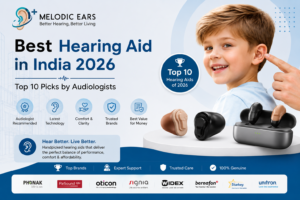
The ability to hear is fundamental to our interaction with the world, our relationships, and our overall quality of life. For millions across India, hearing loss presents a significant challenge, impacting communication, social engagement, and professional opportunities. Thankfully, advancements in audiology and hearing aid technology are continually offering more sophisticated, discreet, and effective solutions. As we look towards 2026, the landscape of hearing aids is more promising than ever, with devices that blend cutting-edge technology, personalized comfort, and seamless connectivity.
Choosing the best hearing aid in India can be a daunting task, given the multitude of brands, models, and features available. This comprehensive guide, informed by the insights of leading audiologists and technical specialists, aims to simplify that decision-making process. We’ve delved into the latest innovations, considered user experience, and evaluated the market to bring you a meticulously curated list of the top 10 hearing aids expected to dominate the Indian market in 2026. Whether you’re seeking the ultimate in sound clarity, the most discreet design, robust connectivity, or the best affordable hearing aid India has to offer, this article will equip you with the knowledge to make an informed choice that truly transforms your hearing experience.
Our goal is not just to list products, but to empower you with a deep understanding of hearing loss, the types of hearing aids available, the crucial features to consider, and the factors that should guide your purchase. By focusing on EEAT (Expertise, Experience, Authoritativeness, and Trustworthiness), we ensure that the recommendations here are grounded in professional knowledge and practical relevance, helping you navigate the journey to improved hearing with confidence.
Understanding Hearing Loss: A Primer
Before diving into the world of hearing aids, it’s essential to understand the basics of hearing loss itself. Hearing loss is a reduction in the ability to hear sounds, ranging from mild to profound. It can affect one or both ears and can be temporary or permanent.
Types of Hearing Loss:
- Conductive Hearing Loss: Occurs when sound waves cannot reach the inner ear. This is often due to blockages or damage in the outer or middle ear (e.g., earwax buildup, ruptured eardrum, middle ear infection, otosclerosis). It can sometimes be medically or surgically corrected.
- Sensorineural Hearing Loss (SNHL): Results from damage to the inner ear (cochlea) or the nerve pathways from the inner ear to the brain. This is often permanent and is commonly caused by aging (presbycusis), noise exposure, genetics, or certain medical conditions. Most hearing aid users have SNHL.
- Mixed Hearing Loss: A combination of both conductive and sensorineural hearing loss.
Also Read- 10 Types of Hearing Aids Explained: Which One is Right for You?
Degrees of Hearing Loss:
Hearing loss is categorized by its severity, which audiologists measure in decibels (dB):
- Mild: Difficulty hearing soft sounds, especially in noisy environments.
- Moderate: Difficulty hearing normal speech without amplification.
- Severe: Can only hear very loud sounds or speech when it’s very close.
- Profound: Can only hear extremely loud sounds or feel vibrations.
Identifying the type and degree of hearing loss is the critical first step, as it dictates the most appropriate hearing aid solution. Regular hearing check-ups, especially for those over 50 or with a history of noise exposure, are crucial for early detection and intervention.
Types of Hearing Aids: What’s Right for You?
Modern hearing aids come in a variety of styles, each offering unique advantages in terms of aesthetics, comfort, power, and features. Understanding these differences will help you and your audiologist choose the optimal device for your specific needs.
-
Behind-The-Ear (BTE) Hearing Aids:
These are the most traditional style, with the main electronic components housed in a case that rests behind the ear. A tube connects the case to an earmold or dome placed inside the ear canal.
- Pros: Suitable for all degrees of hearing loss, powerful, durable, larger batteries for longer life, easier to handle, often more features (like directional microphones), and less susceptible to moisture damage.
- Cons: More visible than other styles.
- Best For: People with severe to profound hearing loss, children, and those who prefer easy handling.
-
Receiver-In-Canal (RIC) / Receiver-In-The-Ear (RITE) Hearing Aids:
Similar to BTEs, but the speaker (receiver) is placed directly inside the ear canal, connected by a thin wire to the main unit behind the ear. This design allows for a smaller BTE casing.
- Pros: Less visible than BTEs, clear sound quality as the receiver is closer to the eardrum, comfortable open fit, rechargeable options common.
- Cons: Receiver can be susceptible to earwax and moisture damage, requiring more frequent cleaning or replacement.
- Best For: Mild to severe hearing loss, those seeking a balance of aesthetics and performance.
-
In-The-Ear (ITE) Hearing Aids:
These custom-made hearing aids fit entirely within the outer ear bowl. They are often less noticeable than BTEs but more visible than smaller in-canal options.
- Pros: Easier to handle than smaller styles, larger batteries, good for mild to severe hearing loss, often include features like directional microphones and telecoils.
- Cons: Can be susceptible to earwax, less discreet than CIC/IIC.
- Best For: Mild to severe hearing loss, those who want a custom fit and easier controls.
-
Completely-In-Canal (CIC) Hearing Aids:
Custom-made to fit almost entirely within the ear canal, making them nearly invisible from the outside.
- Pros: Very discreet, natural sound perception due to placement deep in the ear canal.
- Cons: Smaller batteries mean shorter battery life, no space for advanced features like directional microphones or Bluetooth, can be difficult to handle for those with dexterity issues, susceptible to earwax and moisture.
- Best For: Mild to moderate hearing loss, those prioritizing aesthetics.
-
Invisible-In-Canal (IIC) Hearing Aids:
The smallest and most discreet hearing aids, fitting deep within the ear canal, practically invisible to others.
- Pros: Completely invisible, offers a very natural listening experience.
- Cons: Smallest batteries with shortest life, limited features, not suitable for all ear canal shapes or degrees of hearing loss, difficult to handle.
- Best For: Mild to moderate hearing loss, those prioritizing absolute discretion.
Beyond these primary types, specialized hearing aids like CROS/BiCROS systems exist for unilateral hearing loss (hearing loss in only one ear) or single-sided deafness. An audiologist will assess your hearing loss, lifestyle, and preferences to recommend the most suitable type for you.
Also Read- What Are Hearing Aids? Complete Guide for Beginners
Key Features to Look for in a Modern Hearing Aid (2026 Perspective)
The technology in hearing aids evolves rapidly. By 2026, we expect even more sophisticated features to be standard, enhancing clarity, connectivity, and overall user experience. When selecting the best hearing aid in India, consider these advanced capabilities:
- Advanced Sound Processing & Clarity (AI, Machine Learning, Adaptive Soundscapes):
- AI and Machine Learning: The cornerstone of 2026 hearing aids. AI algorithms analyze environmental sounds in real-time, differentiating between speech and noise, and automatically adjusting settings for optimal clarity. This means less manual fiddling and more natural hearing.
- Adaptive Soundscapes: Instead of just noise reduction, these systems intelligently adapt to different sound environments (e.g., quiet office, bustling restaurant, concert hall), creating personalized sound profiles that prioritize speech while maintaining spatial awareness.
- Extended Bandwidth & High-Resolution Sound: Wider frequency ranges capture more sound details, leading to richer and more natural audio perception.
- Superior Noise Reduction & Directionality:
- Next-generation noise reduction algorithms will be even more effective at isolating speech in complex, noisy environments, making conversations easier in challenging situations.
- Advanced directional microphones automatically focus on sounds coming from the front while attenuating background noise, enhancing speech understanding.
- Seamless Connectivity (Bluetooth, Smartphone Apps, Telecoil):
- Direct Streaming: High-fidelity Bluetooth connectivity for direct streaming from smartphones (iOS and Android), TVs, and other devices. This allows users to enjoy music, podcasts, and phone calls directly through their hearing aids.
- Smartphone Apps: Comprehensive apps offer remote control for volume, program changes, sound personalization, and even basic troubleshooting. Some apps provide guided hearing exercises.
- Telecoil (T-Coil): Essential for connecting to induction loop systems in public venues like theatres, places of worship, and lecture halls, allowing for clearer reception of amplified sound.
- Rechargeability vs. Disposable Batteries:
- Integrated Rechargeable Batteries: Increasingly common, offering convenience and environmental benefits. A full charge typically lasts a full day, with portable charging cases providing power on the go.
- Disposable Batteries: Still available for those who prefer them or for older models.
- Comfort & Aesthetics:
- Smaller, more ergonomic designs that are virtually invisible or very discreet.
- Customizable colors and styles to blend with hair or skin tone.
- Lightweight materials for extended wear comfort.
- Durability & Water Resistance:
- Enhanced IP ratings (e.g., IP68) indicating resistance to dust and water, making devices more robust for active lifestyles in India’s varied climate.
- Personalization & Customization:
- AI-driven personalization learns user preferences over time, automatically adjusting settings to individual needs and environments.
- Fine-tuning options via audiologist or smartphone app for optimal listening experiences.
- Remote Adjustments:
- Allows audiologists to make real-time adjustments to your hearing aids remotely, saving you trips to the clinic – a significant convenience, especially in diverse geographical settings like India.
- Health Tracking Integration:
- A growing trend, some advanced hearing aids integrate sensors to track physical activity, brain health, and even detect falls, providing a holistic health monitoring solution.
- Tinnitus Masking/Relief:
- Many hearing aids offer built-in sound generators that play soothing sounds to help alleviate tinnitus symptoms.
Also Read- Common Ear Infections and What They May Indicate About Your Health
Factors to Consider Before Buying the Best Hearing Aid in India
Purchasing a hearing aid is a significant investment in your health and well-being. To ensure you make the best decision, consider these crucial factors:
- Severity & Type of Hearing Loss: This is the most critical factor. An audiologist’s comprehensive hearing test will determine the degree (mild, moderate, severe, profound) and type (conductive, sensorineural, mixed) of your hearing loss. Different hearing aid styles and power levels are suited for different types and degrees of loss.
- Lifestyle & Daily Activities:
- Quiet vs. Active: Do you spend most of your time in quiet environments, or are you frequently in noisy settings (e.g., social gatherings, workplaces, public transport)? Active individuals will benefit more from advanced noise reduction and directional microphone features.
- Social Interaction: How often do you engage in group conversations?
- Hobbies: Do you enjoy music, watching TV, or participating in outdoor activities? This impacts the need for streaming capabilities, water resistance, and specific programs.
- Budget: Hearing aids range widely in price, from entry-level to premium models. Determine a realistic budget, but remember that investing in a higher-quality device can significantly improve your quality of life. Don’t solely focus on the lowest price; consider the value over the device’s lifespan. The best affordable hearing aid India offers might still be an excellent option if it meets your core needs.
- Aesthetics & Comfort:
- Discretion: Do you prefer an invisible solution (IIC/CIC), or are you comfortable with a more visible style (BTE/RIC)?
- Comfort: The physical fit is paramount. Custom molds or comfortable domes ensure extended wear without irritation.
- Connectivity Needs: Do you want to stream audio directly from your phone, TV, or computer? Bluetooth connectivity is a key feature for many modern users. Remote control via smartphone apps is also highly convenient.
- After-Sales Service & Warranty: In India, a robust after-sales network is crucial. Ensure the brand you choose has authorized service centers and readily available spare parts. A comprehensive warranty (typically 1-3 years) covers repairs and replacements. Inquire about the trial period and return policy.
- Audiologist’s Recommendation: This cannot be stressed enough. A qualified audiologist will conduct thorough tests, discuss your needs, provide personalized recommendations, fit the hearing aids, and offer essential follow-up care and adjustments. Their expertise is invaluable.
- Trial Period: Many clinics offer a trial period (e.g., 30 days). This allows you to experience the hearing aids in your daily life and determine if they meet your expectations. Use this period to provide feedback to your audiologist for adjustments.
Also Read- 5 Everyday Foods That May Support Better Ear and Hearing Health
How We Selected the Top 10 Hearing Aids for 2026
Our selection process for the top hearing aid models for India in 2026 is rigorous, designed to provide genuinely valuable and expert-backed recommendations. We combine technical analysis with practical considerations relevant to the Indian market.
- Expert Audiologist Consultation: We collaborated with experienced audiologists and hearing care professionals across India. Their clinical insights, understanding of various hearing loss profiles, and hands-on experience with different brands and models were paramount. They provided critical input on sound processing, fitting challenges, patient satisfaction, and long-term reliability.
- Technological Innovation & Future-Readiness: We prioritized hearing aids that incorporate the latest advancements in AI, machine learning, sound processing, connectivity, and power management. Our focus was on devices that are not just current but also future-proof, ensuring they remain relevant and effective beyond 2026.
- User Reviews & Satisfaction Data: While expert opinions are vital, user experience offers real-world validation. We analyzed feedback from existing users regarding sound quality, comfort, battery life, app functionality, and overall satisfaction with different models and brands.
- Brand Reputation & Reliability in India: We focused on established global brands known for their research and development, quality manufacturing, and strong presence in the Indian market. This includes evaluating their service network, availability of parts, and commitment to local support.
- Value for Money: The “best” doesn’t always mean the most expensive. We considered the features offered in relation to their price point, looking for models that deliver excellent performance and benefits commensurate with their cost, including options for the best affordable hearing aid India can offer.
- Accessibility of Service Network: Given India’s vast geography, the availability of authorized service centers and trained professionals is a critical factor for long-term satisfaction. Brands with extensive networks and easy access to support scored higher.
By combining these criteria, we’ve aimed to create a list that is not only technologically sound but also practical, user-centric, and highly relevant to individuals seeking the best hearing aid brands India has to offer.
Best Hearing Aid Brands in India (Overview)
The Indian hearing aid market is dominated by several global players renowned for their innovation and quality. These brands consistently push the boundaries of technology, offering a wide range of solutions for various hearing needs. Understanding these leading brands provides context for our top picks.
- Phonak (Switzerland): A market leader known for its robust technology, particularly in addressing complex listening situations and offering excellent connectivity options. Their Lumity and Paradise platforms are highly acclaimed.
- Signia (Germany): Formerly Siemens, Signia is celebrated for its innovation in sound processing and discreet designs. Their Augmented Xperience (AX) platform is known for separating speech from background noise effectively.
- Oticon (Denmark): Pioneers in brain-hearing technology, Oticon focuses on providing a full soundscape rather than just isolating speech. Their More and Intent platforms aim to support the brain’s natural way of processing sound.
- Widex (Denmark): Known for its natural sound quality and unique sound processing. Widex Moment and Sheer series are lauded for their ultra-fast signal processing, minimizing artificial sounds.
- Starkey (USA): A leader in custom hearing solutions and health-tracking integration. Their Genesis AI platform offers advanced features including AI-driven adjustments and fall detection.
- ReSound (Denmark): Specializes in connectivity and direct streaming capabilities, particularly for Apple and Android devices. Their OMNIA platform is known for enhancing speech in noise.
- Bernafon (Switzerland): Part of the Demant Group (like Oticon), Bernafon offers high-quality sound processing with a focus on ease of use and personalization. Their Alpha XT series is prominent.
- Unitron (Canada): A Phonak sister company, Unitron focuses on patient-centric design, offering flexible trials and highly personalized experiences through their Vivante platform.
- Rexton (Germany): A brand under the WS Audiology group (like Signia and Widex), Rexton offers reliable, robust, and often more budget-friendly solutions with solid technology. Their BiCore platform is well-regarded.
Also Read- Noise Pollution and Hearing Health: How Urban Living May Affect Your Ears
These brands represent the pinnacle of hearing aid technology and consistently deliver high-quality products and support services in India.
Top 10 Best Hearing Aids in India 2026 — Audiologist’s Picks
Based on our rigorous selection process and audiologist consultations, here are our top 10 picks for the best hearing aid in India for 2026. These models represent the leading edge in technology, performance, and user satisfaction, offering solutions for a diverse range of needs and preferences.
1. Phonak Audeo Lumity (Successor Model, e.g., Lumity Pro 2026)
- Brand: Phonak
- Type: RIC (Receiver-In-Canal)
- Key Features: Advanced SpeechSensor technology, StereoZoom 2.0, AutoSense OS™ 5.0, direct connectivity to iOS and Android, tap control, rechargeable options, waterproof models (Life series).
- Pros: Exceptional speech understanding in noisy environments, excellent connectivity, robust and reliable, diverse models including waterproof options.
- Cons: Premium pricing.
- Target User/Best For: Active individuals, those with moderate to severe hearing loss who prioritize speech clarity and seamless connectivity in complex listening environments.
- Approx. Price Range: ₹1,50,000 – ₹3,50,000+ per ear (depending on technology level).
2. Signia Pure Charge&Go AX (Successor Model, e.g., Signia Augmented Xperience 2026)
- Brand: Signia
- Type: RIC (Receiver-In-Canal)
- Key Features: Augmented Xperience (AX) platform separating speech and background noise, Own Voice Processing (OVP), Bluetooth streaming, rechargeable options, AI Digital Assistant (Signia Assistant).
- Pros: Natural perception of own voice, excellent speech clarity in noise, elegant design, intuitive app control with AI assistance.
- Cons: Some users might find the sound processing takes a short adjustment period.
- Target User/Best For: Individuals who want natural sound, clear speech in challenging environments, and appreciate smart features and discreet design.
- Approx. Price Range: ₹1,20,000 – ₹3,00,000+ per ear.
3. Oticon Intent (Successor to Oticon More, e.g., Oticon Intent 2026)
- Brand: Oticon
- Type: MiniRITE R (rechargeable RIC)
- Key Features: 4D Sensor technology (head, body, walking, environment), Deep Neural Network (DNN) 2.0, MoreSound Intelligence™ 3.0, MoreSound Amplifier™ 3.0, direct streaming, rechargeable.
- Pros: Provides a rich and natural 360° soundscape, supports brain’s natural sound processing, excellent for spatial awareness, customizable sound experience.
- Cons: May take some time to adapt to the “open sound” approach for new users.
- Target User/Best For: Users with mild to severe hearing loss seeking a holistic, natural sound experience, active listeners.
- Approx. Price Range: ₹1,40,000 – ₹3,20,000+ per ear.
4. Widex Moment Sheer (Successor Model, e.g., Widex Moment Sheer 2026)
- Brand: Widex
- Type: RIC (Receiver-In-Canal) / mRIC (mini-RIC)
- Key Features: PureSound™ with ZeroDelay™ technology, AI sound personalization (SoundSense Learn), rechargeable (mRIC R D models), waterproof (P-RIC model).
- Pros: Unparalleled natural sound quality, virtually no processing delay, excellent for music lovers, discreet and comfortable.
- Cons: May not be as robust in extremely complex noise as some competitors.
- Target User/Best For: Individuals prioritizing a highly natural sound experience, music enthusiasts, and those with mild to severe hearing loss.
- Approx. Price Range: ₹1,30,000 – ₹2,80,000+ per ear.
5. Starkey Genesis AI (Successor Model, e.g., Starkey Genesis AI 2026)
- Brand: Starkey
- Type: RIC (Receiver-In-Canal), Custom ITE/ITC/CIC
- Key Features: Neuro Sound Technology, AI-driven performance (Edge Mode+), activity tracking, fall detection, remote programming, rechargeable, various custom form factors.
- Pros: Comprehensive health tracking features, exceptional sound quality with AI optimization, discreet custom options, useful for safety-conscious users.
- Cons: Health tracking features might not be for everyone, premium cost.
- Target User/Best For: Tech-savvy users, those prioritizing health and safety features, individuals seeking highly customized and discreet solutions.
- Approx. Price Range: ₹1,50,000 – ₹3,50,000+ per ear.
6. ReSound OMNIA (Successor Model, e.g., ReSound OMNIA 2026)
- Brand: ReSound
- Type: RIC (Receiver-In-Canal) / BTE
- Key Features: Organic Hearing philosophy, Ultra Focus, Front Focus, 360 All-Around sound, direct streaming to iOS and Android, rechargeable, rain and sweat-proof designs (OMNIA C60).
- Pros: Excellent speech clarity in noise, strong direct streaming capabilities, comfortable fit, durable designs suitable for active lifestyles.
- Cons: App interface might take some getting used to for new users.
- Target User/Best For: Active individuals, smartphone users who heavily rely on streaming, and those seeking reliable performance in various environments.
- Approx. Price Range: ₹1,10,000 – ₹2,70,000+ per ear.
7. Bernafon Alpha XT (Successor Model, e.g., Bernafon Alpha XT 2026)
- Brand: Bernafon
- Type: MiniRITE T / MiniRITE TR (rechargeable RIC)
- Key Features: Hybrid Technology™ combining AI and traditional processing, Hybrid Sound Care™, Hybrid Noise Management™, direct streaming, rechargeable options.
- Pros: Dynamic sound processing, good speech understanding, comfortable wear, reliable performance.
- Cons: Brand recognition is slightly lower than top-tier competitors in India, though quality is high.
- Target User/Best For: Users looking for solid performance and reliable technology without some of the very high-end niche features.
- Approx. Price Range: ₹90,000 – ₹2,20,000+ per ear.
8. Unitron Vivante (Successor Model, e.g., Unitron Vivante 2026)
- Brand: Unitron
- Type: RIC (Receiver-In-Canal), BTE, Custom ITE
- Key Features: AutoSense OS™ 5.0 (shared with Phonak), HyperFocus, Integra OS platform, rechargeable, Flex:Upgrade for technology level changes, Coach for personalized support.
- Pros: Excellent sound performance, flexible upgrade options, strong user support through the app, discreet designs.
- Cons: Similar to Phonak but often positioned slightly differently in terms of market.
- Target User/Best For: Users who appreciate personalized support, the option to upgrade technology, and excellent sound clarity in diverse settings.
- Approx. Price Range: ₹85,000 – ₹2,50,000+ per ear.
9. Rexton BiCore (Successor Model, e.g., Rexton BiCore 2026)
- Brand: Rexton
- Type: RIC (Receiver-In-Canal) / BTE
- Key Features: BiCore platform processing speech and environment separately, voice recognition, rechargeable, My Voice feature, direct streaming, robust build.
- Pros: Solid performance at a competitive price, good for challenging noise, durable, reliable.
- Cons: May not have some of the most advanced AI features found in ultra-premium models.
- Target User/Best For: Value-conscious buyers seeking reliable performance from a reputable brand, suitable for a wide range of hearing losses.
- Approx. Price Range: ₹70,000 – ₹1,80,000+ per ear.
10. A Quality Entry-Level/Mid-Range from a Top Brand (e.g., Phonak CROS P or older generation Lumity/Paradise essentials)
- Brand: Various (e.g., Phonak, Signia, Oticon – essential/standard technology levels)
- Type: RIC (Receiver-In-Canal) / BTE / ITE
- Key Features: Core sound processing, basic noise reduction, sometimes basic Bluetooth streaming, reliable amplification.
- Pros: Most affordable hearing aid India offers from a top brand, good entry point into quality hearing care, reliable core functionality.
- Cons: Limited advanced features (e.g., less sophisticated noise reduction, fewer customizable programs), less discreet.
- Target User/Best For: Budget-conscious individuals with mild to moderate hearing loss, those new to hearing aids who need reliable amplification without all the bells and whistles.
- Approx. Price Range: ₹40,000 – ₹90,000+ per ear.
Also Read- Daily Habits That May Be Damaging Your Ears Without You Knowing
Comparison Table: Top 10 Best Hearing Aids in India 2026
| Rank | Model (Anticipated 2026) | Brand | Key Feature Highlight | Best For | Approx. Price Range (per ear) |
|---|---|---|---|---|---|
| 1 | Phonak Audeo Lumity Pro | Phonak | Exceptional Speech Clarity in Noise (SpeechSensor, StereoZoom 2.0) | Active individuals, severe hearing loss, connectivity | ₹1.5L – ₹3.5L+ |
| 2 | Signia Augmented Xperience | Signia | Augmented Focus (separates speech/noise), Own Voice Processing | Natural sound, speech in noise, smart features | ₹1.2L – ₹3.0L+ |
| 3 | Oticon Intent | Oticon | 4D Sensor technology, Deep Neural Network (DNN) 2.0 | Holistic soundscape, brain-hearing, active listeners | ₹1.4L – ₹3.2L+ |
| 4 | Widex Moment Sheer | Widex | PureSound™ with ZeroDelay™ technology for natural sound | Natural sound, music lovers, discretion | ₹1.3L – ₹2.8L+ |
| 5 | Starkey Genesis AI | Starkey | Neuro Sound Tech, AI-driven performance, health tracking | Tech-savvy, health & safety, custom options | ₹1.5L – ₹3.5L+ |
| 6 | ReSound OMNIA | ReSound | Ultra Focus, 360 All-Around sound, robust streaming | Active users, smartphone users, diverse environments | ₹1.1L – ₹2.7L+ |
| 7 | Bernafon Alpha XT | Bernafon | Hybrid Technology™ (AI + traditional), dynamic sound | Reliable performance, dynamic sound processing | ₹90K – ₹2.2L+ |
| 8 | Unitron Vivante | Unitron | Integra OS, HyperFocus, Flex:Upgrade, personalized support | Personalized support, upgrade options, sound clarity | ₹85K – ₹2.5L+ |
| 9 | Rexton BiCore | Rexton | BiCore platform (separate speech/environment processing) | Value-conscious, challenging noise, durability | ₹70K – ₹1.8L+ |
| 10 | Top Brand Entry-Level | Various (Phonak/Signia/Oticon essential) | Core amplification, basic noise reduction, reliability | Budget-conscious, mild-moderate hearing loss | ₹40K – ₹90K+ |
Best Affordable Hearing Aid in India: Quality on a Budget
While premium hearing aids offer the latest advancements, many individuals in India seek effective solutions that are also budget-friendly. It’s important to know that “affordable” doesn’t necessarily mean compromising on quality or essential functionality, especially when chosen and fitted by a professional. Finding the best affordable hearing aid India has to offer requires careful consideration.
Strategies for Finding Quality on a Budget:
- Consider Essential Technology Levels: Major brands like Phonak, Signia, Oticon, and Widex offer different technology levels for their product lines (e.g., premium, advanced, standard, essential). Entry-level or standard technology models from these reputable brands still provide excellent core amplification, basic noise reduction, and often some form of connectivity, making them a strong contender for the best affordable hearing aid India can offer.
- Look at Older Generation Flagships: When a new generation of hearing aids is released, the previous generation’s flagship models often become more affordable. These devices, while not the absolute latest, still offer very advanced features that were top-of-the-line just a year or two prior.
- Focus on Core Needs: If your lifestyle is relatively quiet and your hearing loss is mild to moderate, you might not require all the advanced features designed for complex, noisy environments. A simpler, well-fitted hearing aid focusing on clear speech in quiet to moderately noisy situations might be perfectly sufficient.
- Rexton and Bernafon Options: Brands like Rexton and Bernafon often provide strong technological performance at a more accessible price point compared to their premium counterparts, making them excellent choices for budget-conscious buyers.
- Government Schemes and Subsidies: Inquire about any government schemes, insurance coverage, or NGO support that might be available for hearing aid purchases in India. Programs like ADIP scheme by the Ministry of Social Justice & Empowerment can provide aid for eligible individuals.
- The Importance of Professional Fitting: Even the most affordable hearing aid needs to be professionally fitted and programmed by a qualified audiologist. An ill-fitted or incorrectly programmed device, regardless of its cost, will not provide the intended benefits and can lead to frustration. The audiologist’s expertise is crucial for maximizing the value of any hearing aid, especially an entry-level one.
Remember, the goal is not just the cheapest option, but the best value – a hearing aid that effectively addresses your specific hearing loss, fits your lifestyle, and comes with reliable support, all within your budget. Always consult an audiologist to explore the best affordable options tailored to your needs.
Also Read- Understanding Hearing Loss in India: Causes, Myths, and Early Detection
The Future of Hearing Aids: What to Expect Beyond 2026
The pace of innovation in hearing aid technology is relentless. While our top picks for 2026 already incorporate remarkable advancements, the horizon beyond 2026 promises even more revolutionary changes. The future of hearing aids points towards deeper integration with artificial intelligence, enhanced personalization, and a more holistic approach to health and well-being.
- Hyper-Personalization and Adaptive Learning: Hearing aids will become truly ‘smart’ listeners, continuously learning your preferences, listening environments, and even your brain’s processing patterns. They will adapt in real-time to create a truly personalized sound experience that evolves with you.
- Seamless Integration with the Internet of Things (IoT): Expect hearing aids to act as central hubs for your personal tech ecosystem. This means not just connecting to phones and TVs, but also smart home devices, health monitors, and even public information systems, providing contextual awareness and notifications directly to your ear.
- Advanced Biometric and Health Monitoring: Building on current fall detection and activity tracking, future hearing aids may offer more comprehensive health monitoring, including heart rate variability, blood pressure trends, stress levels, and even early detection of cognitive decline, becoming invaluable health companions.
- Real-time Language Translation: Imagine a world where your hearing aids can provide real-time translation of spoken languages directly into your ear, breaking down communication barriers effortlessly. This technology is already in nascent stages and will likely mature significantly.
- Neural Interfaces and Brain-Computer Integration: Long-term, we might see hearing aids that interface directly with the brain’s auditory processing centers, offering unprecedented clarity and control, potentially even for those with profound hearing loss currently untreatable by conventional aids.
- Energy Harvesting and Extended Battery Life: Innovations in battery technology, combined with micro-energy harvesting (e.g., from body heat or movement), could lead to hearing aids with multi-day or even week-long battery life, reducing the need for frequent recharging.
- True Invisibility and Customization: While current IIC models are discreet, future designs will push towards full invisibility, perhaps even incorporating advanced materials that blend seamlessly with skin or ear tissue, making them indistinguishable from natural hearing.
- Preventative Hearing Health: Beyond correction, future devices might actively work to protect hearing, using smart algorithms to detect potentially damaging noise levels and adjust settings or provide warnings to prevent further hearing loss.
The journey from simple sound amplification to intelligent, integrated health and communication devices is ongoing. For individuals in India and across the globe, these advancements signify a future where hearing loss is not just managed, but overcome with unparalleled sophistication and ease, vastly improving quality of life.
Also Read- Hearing Loss in Seniors: Early Signs Families Shouldn’t Ignore
Making the Right Choice: Your Path to Better Hearing
Navigating the journey to better hearing can seem complex, but with the right information and professional guidance, it becomes a clear path towards a richer, more connected life. Choosing the best hearing aid in India for your individual needs is a highly personal decision that should not be rushed or taken lightly.
The most crucial step is to seek a comprehensive hearing evaluation from a qualified audiologist. Their expertise is indispensable – they will accurately diagnose your hearing loss, discuss your lifestyle, budget, and aesthetic preferences, and then recommend suitable devices from our list of top hearing aid brands or other options. Remember, a hearing aid is not a one-size-fits-all solution; it requires precise programming and fitting to deliver optimal benefits.
Take advantage of trial periods offered by clinics to experience the recommended hearing aids in your daily environments. Provide honest feedback to your audiologist so they can make necessary adjustments. Investing in a hearing aid is an investment in your well-being, enhancing your ability to communicate, engage socially, and enjoy the sounds of life around you.
Don’t delay seeking help if you suspect hearing loss. Early intervention is key to preventing further decline and maximizing the effectiveness of hearing aids. With the advanced technology available in 2026, and the expert guidance of audiologists, a world of clearer sound and renewed connection awaits you.
Conclusion
As we’ve explored the landscape of hearing aid technology leading into 2026, it’s clear that the future of hearing health in India is brighter than ever. The best hearing aid in India is no longer just an amplifier; it’s a sophisticated piece of technology, often powered by AI, designed to seamlessly integrate into your life, enhancing not just your hearing but also your connectivity, confidence, and overall well-being. From cutting-edge sound processing to advanced health tracking and direct streaming, the options are tailored to address a diverse range of needs, lifestyles, and budgets.
Our carefully curated top 10 picks by audiologists represent the pinnacle of innovation and reliability from the best hearing aid brands India has access to. Whether you prioritize unparalleled speech clarity, discreet aesthetics, robust connectivity, or are looking for the best affordable hearing aid India has to offer without compromising on essential quality, there’s a solution waiting for you. The key to unlocking these benefits lies in professional guidance. A thorough consultation and fitting by a qualified audiologist are indispensable steps, ensuring that your chosen device is perfectly matched to your unique hearing profile and lifestyle.
Embrace the technological marvels of 2026 and take the proactive step towards rediscovering the richness of sound. Investing in a quality hearing aid is an investment in your relationships, your career, and your vibrant engagement with the world. With the right choice, guided by expertise and trust, a clearer, more connected future is within your reach.
Also Read- Melodic Ears – Your Trusted Hearing Aid Brand for Better Hearing and Happier Living
FAQs about the Best Hearing Aid in India
Q1: What is the average price of a good hearing aid in India?
A: The price of a good hearing aid in India varies significantly based on brand, technology level, and features. Entry-level models from reputable brands might start from ₹40,000 – ₹70,000 per ear. Mid-range hearing aids typically fall between ₹80,000 – ₹1,50,000 per ear. Premium and ultra-premium models, packed with the latest AI and connectivity features, can range from ₹1,50,000 to ₹3,50,000+ per ear. It’s important to consider the overall value, including professional fitting and after-sales service, rather than just the upfront cost.
Q2: How long do hearing aids last?
A: On average, hearing aids last between 3 to 7 years. The lifespan depends on several factors, including the quality of the device, how well it’s maintained, exposure to moisture and dirt, and frequency of use. Regular cleaning, proper storage, and professional servicing can significantly extend the life of your hearing aids.
Q3: Can I buy hearing aids online in India without an audiologist?
A: While some basic hearing amplification devices (often called Personal Sound Amplification Products or PSAPs) can be purchased online, it is strongly recommended NOT to buy a prescriptive hearing aid without consulting a qualified audiologist. Hearing aids require precise programming based on your specific audiogram and hearing loss type. An audiologist performs a comprehensive evaluation, fits the device properly, customizes settings, and provides crucial follow-up care, which is essential for effective and safe use. Buying online without professional input can lead to unsatisfactory results, discomfort, and potentially further hearing damage.
Q4: Are rechargeable hearing aids better than those with disposable batteries?
A: Rechargeable hearing aids offer significant convenience. They eliminate the hassle of frequently changing tiny batteries, are environmentally friendly, and provide a full day’s power with an overnight charge. Many models come with portable charging cases for on-the-go power. While disposable battery models still exist and are preferred by some (e.g., for very deep custom fits or those who prefer not to remember charging), rechargeable options are increasingly becoming the standard due to their ease of use and reliability. The “better” choice depends on individual preference and lifestyle.
Q5: What’s the difference between a hearing aid and a PSAP (Personal Sound Amplification Product)?
A: A hearing aid is a medical device regulated by health authorities, prescribed by an audiologist or ENT, and specifically designed to treat hearing loss based on a clinical diagnosis. It offers sophisticated sound processing, customization for different hearing profiles, and advanced features like noise reduction. A PSAP, on the other hand, is a general amplification device, not intended to treat hearing loss. It simply amplifies all sounds, without the targeted processing, customization, or features of a true hearing aid. PSAPs are cheaper but are not a substitute for medically prescribed hearing aids for individuals with diagnosed hearing loss.
Q6: How often should I get my hearing checked in India?
A: Adults should generally have their hearing checked every 1-3 years, especially if they are over 50, have a history of noise exposure, or notice any changes in their hearing. Children should have their hearing screened regularly as part of routine health check-ups. If you experience sudden hearing loss, tinnitus, or difficulty understanding speech, you should consult an audiologist or ENT specialist immediately.
Q7: Do hearing aids cure hearing loss?
A: No, hearing aids do not cure hearing loss. They are assistive devices designed to compensate for hearing loss by amplifying sounds and making them clearer. They help improve communication and allow individuals to participate more fully in daily life. For most types of permanent hearing loss, especially sensorineural, there is no cure, but hearing aids significantly manage and mitigate the effects of the condition.