Quick answer
Hyperacusis is increased sensitivity to ordinary sounds that most people can tolerate. Sounds such as conversation, running water, traffic or household appliances may seem excessively loud, uncomfortable or painful. It can occur with tinnitus and other conditions, but there is no single cause. Assessment by an audiologist or ENT specialist can help identify possible causes and guide treatment.
What is hyperacusis?
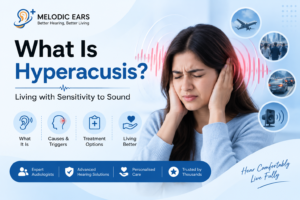
Hyperacusis is a condition in which ordinary sounds seem unusually loud, uncomfortable or painful. The sounds themselves may be at a normal volume, but a person with hyperacusis may have a much lower tolerance for them.
For example, sounds such as someone speaking, a car engine, running water, household appliances or other everyday noises may become difficult to tolerate. The reaction can range from mild discomfort to physical pain or emotional distress.
Hyperacusis is also described as a form of decreased sound tolerance. It can affect one or both ears and can vary in severity.
Some people have hyperacusis alongside tinnitus, while others do not have tinnitus or hearing loss.
Table of contents
- What is hyperacusis?
- What does hyperacusis feel like?
- Hyperacusis symptoms
- What causes hyperacusis?
- Hyperacusis and tinnitus: what is the difference?
- Hyperacusis vs misophonia and phonophobia
- How is hyperacusis diagnosed?
- How is hyperacusis treated?
- Can you live a normal life with hyperacusis?
- Will hyperacusis ever go away?
- Can earplugs make hyperacusis worse?
- When should you see a doctor?
- Frequently asked questions
- What to do if everyday sounds are becoming difficult to tolerate
What does hyperacusis feel like?
Hyperacusis does not feel exactly the same for everyone.
A person may describe ordinary sounds as:
- much louder than expected
- uncomfortable
- sharp or harsh
- physically painful
- frightening
- difficult to tolerate for long periods
For some people, the problem is mainly physical discomfort. Others experience emotional reactions or start avoiding places where they expect certain sounds.
Hyperacusis can also affect daily activities. People may have difficulty concentrating, sleeping, relaxing, following conversations or taking part in social situations.
Symptoms can become more difficult to manage when a person is tired or stressed. Cleveland Clinic also notes that worrying about noise exposure can make symptoms feel worse.
Also Read- What Is Tinnitus? Causes, Treatment & Hearing Aid Solutions
Hyperacusis symptoms
Common hyperacusis symptoms include:
- Everyday sounds seeming unusually loud
- Pain or discomfort when exposed to ordinary sounds
- Sensitivity to conversations, traffic or household appliances
- Ear pain
- A feeling of pressure or fullness in the ears
- Tinnitus, such as ringing or buzzing, when the two conditions occur together
- Difficulty concentrating
- Difficulty relaxing or sleeping
- Avoidance of noisy environments
- Anxiety or emotional distress related to sound
The symptoms and their severity vary from person to person. Hyperacusis can also occur alongside other hearing or medical conditions, so sound sensitivity alone does not identify its cause.
Also Read- CIC Hearing Aids: Price in India, Benefits, Types & Complete Guide
What causes hyperacusis?
There is no single cause of hyperacusis. In some people, the underlying cause remains unknown.
Medical and audiology sources associate hyperacusis with several conditions and factors, including noise exposure, acoustic trauma, migraine, Ménière’s disease, head or neck injury, neurological conditions, medication effects, TMJ disorders and some inner-ear or facial-nerve conditions.
Loud noise exposure
Exposure to loud sounds can be associated with hyperacusis. This may involve repeated exposure over time or a sudden loud sound.
Examples include concerts, fireworks, machinery and occupational noise.
Tinnitus
Hyperacusis frequently occurs with tinnitus, although they are different conditions.
Tinnitus involves hearing a sound such as ringing, buzzing or hissing without an external sound source. Hyperacusis involves reduced tolerance to external sounds.
A person can have tinnitus without hyperacusis, hyperacusis without tinnitus, or both conditions together.
Migraine
Migraine is one of the conditions associated with hyperacusis. Some people experience increased sensitivity to sound during migraine episodes.
Ménière’s disease
Ménière’s disease affects the inner ear and can occur alongside sound sensitivity. It can also involve symptoms such as vertigo, tinnitus and changes in hearing.
Head, neck or ear injury
Head or neck trauma can be associated with hyperacusis. Certain ear or facial-nerve problems can also affect how sound is experienced.
Other medical conditions
Hyperacusis has also been associated with conditions such as autism spectrum disorder, superior canal dehiscence, TMJ disorders, neurological conditions and some infections.
Because the list of possible causes is broad, persistent sound sensitivity should be assessed rather than self-diagnosed.
Hyperacusis and tinnitus: what is the difference?
Hyperacusis and tinnitus are often mentioned together, but they describe different symptoms.
Tinnitus is the perception of a sound without an external source. A person may hear ringing, buzzing, hissing, clicking or another sound.
Hyperacusis is reduced tolerance to sounds that other people with typical hearing may find acceptable or tolerable.
They can occur independently or at the same time.
If you have both tinnitus and sensitivity to everyday sounds, tell the audiologist or ENT specialist about both symptoms during your assessment.
You can also read our hearing-related resources to explore other information about hearing health.
Also Read- Rechargeable Hearing Aids vs Battery: Which Is Better?
Hyperacusis vs misophonia and phonophobia
Hyperacusis, misophonia and phonophobia all involve reactions to sound, but they are not interchangeable terms.
Hyperacusis generally involves reduced tolerance to ordinary sounds. The reaction may involve physical discomfort, pain or emotional distress.
Misophonia involves a strong negative emotional reaction to particular sounds, often repetitive sounds that are not necessarily loud.
Phonophobia refers to a persistent fear of sound.
These conditions can overlap, and the exact symptoms matter when determining what type of assessment is appropriate.
How is hyperacusis diagnosed?
Hyperacusis is assessed through a combination of medical history, hearing assessment and other tests when they are needed.
An audiologist or ENT specialist may ask about:
- when your sound sensitivity started
- which sounds cause problems
- whether sounds cause pain or emotional distress
- previous exposure to loud noise
- tinnitus or hearing changes
- migraine symptoms
- head or neck injuries
- medicines you take
- other health conditions
A hearing assessment may be included. Depending on the person’s symptoms, an audiologist may also assess loudness discomfort levels or use other tests to understand hearing and sound tolerance. Cleveland Clinic lists hearing tests, loudness discomfort level testing and ear-related tests among possible parts of an assessment.
ASHA states that audiologists have a central role in assessing and managing people with tinnitus and hyperacusis and may refer patients to other professionals when needed.
If you want to check your hearing as an initial screening step, you can use the Melodic Ears online hearing test. An online hearing test does not diagnose hyperacusis or replace a professional hearing evaluation.
How is hyperacusis treated?
There is no single standard treatment for every person with hyperacusis. Treatment depends on the symptoms and any underlying condition that is identified.
Treating the underlying condition
If a specific condition is contributing to hyperacusis, treatment may focus on that condition.
For example, the assessment may identify migraine, Ménière’s disease, an ear condition, medication effects or another medical problem that needs attention.
Sound therapy
Sound therapy may be used to gradually increase tolerance to sound.
The approach generally involves controlled sound at a comfortable level, followed by gradual changes under appropriate guidance. The aim is to reduce sound intolerance rather than expose someone suddenly to loud or painful noise.
A 2024 scoping review found that sound therapy is used in clinical practice for adults with hyperacusis, but also identified differences in treatment methods and a need for better understanding of how these approaches are used.
A 2026 systematic review found improvement across the sound-generator studies it included, while also stating that more randomised controlled trials are needed to establish the effectiveness of sound-based treatment more fully.
Cognitive behavioural therapy
CBT may be used when hyperacusis is accompanied by anxiety, distress or avoidance.
This does not mean that hyperacusis is a mental illness. The purpose is to help a person manage the emotional and behavioural effects that can develop when everyday sounds become difficult to tolerate.
Tinnitus-related treatment
When tinnitus and hyperacusis occur together, the treatment plan may address both conditions.
The appropriate approach depends on the person’s symptoms and assessment results.
Can you live a normal life with hyperacusis?
Many people with hyperacusis continue working, studying, travelling and spending time with family and friends. The effect on daily life depends on the severity of the sound sensitivity and whether another condition is contributing to it.
Some people need changes to their environment or treatment to make everyday activities easier. Others may experience improvement after the underlying cause is addressed.
The goal is not necessarily to avoid every sound. Excessive avoidance can reduce participation in normal activities, while inappropriate or continuous use of hearing protection may also be unhelpful for some people. Cleveland Clinic advises people with hyperacusis to work with a healthcare provider rather than trying to manage the condition entirely on their own.
Will hyperacusis ever go away?
Hyperacusis can improve in some people, but there is no fixed recovery time and no guarantee that it will disappear completely.
Cleveland Clinic states that symptoms may improve when the condition causing hyperacusis is treated or resolves. For some people, however, hyperacusis can be a longer-term condition that needs ongoing management.
The expected course depends on the individual cause, symptoms and response to treatment.
Can earplugs make hyperacusis worse?
Earplugs and hearing protection have an appropriate role when you are exposed to genuinely loud or hazardous noise.
The problem is using them continuously to block ordinary sounds without professional guidance. Cleveland Clinic notes that some people with hyperacusis may experience sounds as more intense after removing earplugs or headphones, and that avoiding social situations can contribute to isolation and related distress.
This does not mean you should expose yourself to painful sounds. If ordinary sounds are difficult to tolerate, discuss sound exposure and hearing protection with an audiologist or ENT specialist.
When should you see a doctor?
Arrange a professional assessment if:
- everyday sounds have become painful
- normal sounds suddenly seem much louder
- sound sensitivity is affecting work, study or sleep
- you are avoiding normal activities because of noise
- you also have tinnitus or changes in hearing
- you have ear pressure, pain or balance problems
- symptoms started after loud-noise exposure or an injury
An ENT specialist or audiologist can assess your symptoms and determine whether further testing is needed.
Also Read- 5 Everyday Foods That May Support Better Ear and Hearing Health
Frequently asked questions
What is the main cause of hyperacusis?
There is no single main cause of hyperacusis. It can be associated with loud-noise exposure, acoustic trauma, tinnitus, migraine, Ménière’s disease, head or neck injury, neurological conditions, medication effects and several other medical conditions. In some people, the underlying cause remains unknown.
Can you live a normal life with hyperacusis?
Yes. Many people continue their usual work, studies and social activities, although some need treatment or changes to manage sound sensitivity. The effect on daily life depends on the severity of symptoms and any underlying condition.
Will hyperacusis ever go away?
It can improve in some people, particularly when an underlying cause is treated or resolves. For others, it can continue for longer and require ongoing management. There is no single recovery time that applies to everyone.
Is hyperacusis a mental illness?
No. Hyperacusis is a condition involving reduced tolerance to sound. It is not classified as a mental illness. However, persistent sound sensitivity can contribute to anxiety, distress and avoidance, which may need attention as part of a person’s overall care.
Is hyperacusis the same as tinnitus?
No. Tinnitus is the perception of sound without an external source, while hyperacusis involves reduced tolerance to external sounds. The two conditions can occur together.
Can hyperacusis cause hearing loss?
Hyperacusis does not necessarily mean that a person has hearing loss. Some people with hyperacusis have normal hearing. A hearing assessment can help determine whether hearing loss or another hearing-related condition is also present.
What kind of doctor treats hyperacusis?
An audiologist or ENT specialist can assess hyperacusis. Depending on the symptoms and suspected cause, other healthcare professionals may also be involved. ASHA identifies audiologists as central to the assessment and management of tinnitus and hyperacusis.
Can earplugs cure hyperacusis?
No. Earplugs protect the ears from loud or hazardous noise but do not cure hyperacusis. Using them continuously to block ordinary sounds may not be helpful for everyone and should be discussed with a healthcare professional.
What to do if everyday sounds are becoming difficult to tolerate
If normal sounds have started feeling unusually loud, uncomfortable or painful, don’t try to diagnose the cause from symptoms alone.
A hearing assessment can help determine whether there is an associated hearing problem and whether you need further evaluation. You can start with the Melodic Ears online hearing test for a preliminary hearing check, keeping in mind that an online test cannot replace a clinical assessment.
If your symptoms persist or are affecting daily life, you can contact Melodic Ears to ask about the next step. A qualified healthcare professional can determine whether an audiology or ENT assessment is appropriate.
For medical concerns, use professional clinical advice rather than relying on this article alone. Melodic Ears states that its educational content and online hearing tools are informational and do not replace diagnosis or professional healthcare consultation.
Medical review and sources
This article is for education and general awareness. Medical information should be reviewed by an appropriately qualified healthcare professional before publication.
Research sources used
The medical claims above were checked against:
- Cleveland Clinic — Hyperacusis: Hearing Sensitivity Causes & Treatment — updated March 18, 2026.
- American Speech-Language-Hearing Association — Tinnitus and Hyperacusis — definitions, associated conditions, assessment and management.
- NHS — Noise sensitivity (hyperacusis) — symptoms, related sound-tolerance conditions and treatment guidance.
- PubMed — Current Recommendations for the Use of Sound Therapy in Adults with Hyperacusis — 2024 scoping review of sound-therapy practice.
- PubMed — A systematic review on sound-based therapy for individuals with hyperacusis — 2026 systematic review of sound-based treatment evidence